Tuesday, January 28, 2014

Acids and Bases: Concentration

What is concentration?

Concentration is the amount of substance dissolved in a fixed volume of solution. In other words it's: 

Amount of substance / Volume of solution

Main Points:

  • The strength of the acid is relative to the % dissociated
That's why even if the acid has higher strength, if the concentration is higher, it can have a lower pH. This is the formula for pH by the way:


Anything with square brackets mean it's "concentration of" apparently.
  • The concentration of H+ ions determines the pH
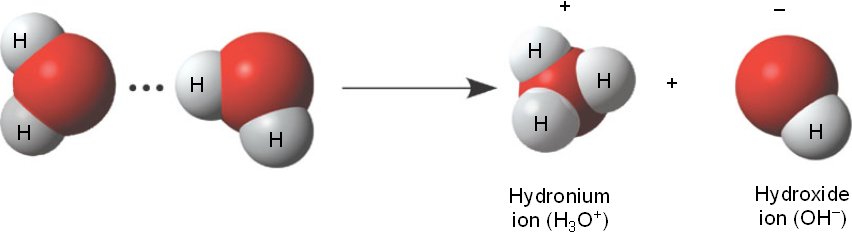
There are always H+ ions and OH- ions in every acid. The weaker the acid, the higher the amount of OH- ions and the lower the amount of H+ ions. Therefore, your H+ ions are relative to your acidity and the OH- ions to your basicity. 


If you still don't get it it's fine. Just remember that the higher the concentration of H+ ions, the lower the pH. 

Other points:

  • pH is only dependant on the concentration of H+ ions.
  • pH is non-linear

Tuesday, January 7, 2014

Acids and Bases: Dissociation

What's that?

Dissociation is really just "to take apart what was associated". In chemistry terms, it is 
Splitting a soluble substance in water into ions. 

The simplest formula would be:

AB --> A + B

Here are some other facts:
  • During dissociation, the ionic bonds are broken, but the covalent ones are not.
  • Dissociation is actually a reversible process due to equilibrium, but the amount it so small it's really almost negligible.
  • Dissolving is a dissociation process.


Acids and Bases: Bases

What are Bases?

Bases, according to this genius guy named Arrhenius (yes, they rhyme), is a substance that releases hydroxide (OH−) ions. These substances react to acids to give salt and water only. All metal oxides and hydroxides can act as bases. Here are some examples of bases:


Here are the properties pertaining to ALL bases:
1. They turn red litmus paper blue; and on blue litmus paper the paper remains blue
2. They have a bitter taste and soapy feel
3. They react with acids to form salt and water only
4. When heated up with an ammonium salt, ammonia gas is produced
5. Strong bases can dissolve in water to form solutions that can conduct electricity 

Soluble bases, which are also strong bases, are called alkalis. 

Extra bits: Not all metal oxides and hydroxides are alkalis. This is because not all of them are soluble, a property of alkalis.


Monday, January 6, 2014

Acids and Bases: Acids

What are Acids?

Acids are substances that release hydrogen ions when dissolved in water. They can be classified as weak or strong as seen in this table:


And their properties are as the following:

1. Acids have a sour taste (Not that you should ever taste them)
2. Acids turn blue litmus paper red
3. Acids react with reactive metals to form hydrogen and salt
4. Acids react with metal oxides and hydroxides to form salt and water only.
5. Strong acids dissolve in water to form solutions that can conduct electricity


Extra bits:
The reason why strong acids are stronger electrolytes is because they form ionic compounds. When an ionic compound has charged particles, it can conduct electricity.


Sunday, May 26, 2013

Marble Run reflections

The Task

Using plastiscine, straws, masking tape, cue cards, push pins and a rigid board, we had to design and build a pathway for a marble to roll from the left hand corner to the bottom right hand corner. The team with the longest lasting marble track, meaning the track where the marble takes the slowest time to travel from point to point, will be the winner. 

The Design

We had used the straws as it created more friction than the cue cards. Also masking tape was used to slow down the ball. Plastiscine was also molded into small balls to act as speed bumps to further increase the friction. We had also decided to use the smallest marble, since it has smaller mass, there will be less gravitational energy acting on it, and hence less kinetic energy. So it should be slower. Finally, the board had been tilted to a smaller gradient. Since it's not as steep, it will be slower.

Our final design

The Challenges

Initially, we had problems with the amount of straws. There were too few straws and the marble track hadn't been completed. In the end we used plastiscine to finish up the rest of the track.

But that created another problem, the marble was sticking to the plastiscine. We decided to wrap the plastiscine in masking tape rather, so it ended up as the basic structure for support. We also cleaned the marble for existing plastiscine that was stuck onto the ball. 

The Application

There are several more types of guiding structures that could also be used. One such example is the DNA structure, this means that the whole structure need not be covered but still can transport the "ball" safely. It's kind of like a pipe. 
Double-helix bridge, an example of the DNA structure
Alternatively, we could also use the dam structure. This means that even liquids can be transported by this U-structure, making it twice as effective.

Dam structure


Sunday, March 31, 2013

Chemical and Physical Changes

What is a Chemical change?

A chemical change forms a new substance and this process is usually irreversible. Varying from each chemical reaction, the substance either absorbs or gives off energy.


What is a Physical change?

During a physical change, unlike the chemical change, there is no release or absorption of energy. There will not be any new substances formed, usually it's a change of state or shape, and the process is easily reversed by physical means.


The Experiment

To prove that in a chemical change, unlike a physical change, the process is irreversible, we shall conduct an experiment.

You will need:
Copper (II) carbonate
Sodium chloride
2 Test tubes
Bunsen burner

Procedure:
1. Scoop one spatula of Copper (II) carbonate into a dry test tube
2. If there is not observable change, heat strongly by placing the bottom of the test tube at the hottest part of the flame
3. After heating, place the test tube in a test tube rack and leave it to cool. Observe any changes in color or state that might take place on cooling
4. Record your observation in the table below
5. Repeat steps 1 to 4 with sodium chloride

Observations

The table (filled in)

Reflections

From what we just observed, sodium chloride just underwent melting whilst copper (II) carbonate underwent thermal decomposition. I will cover more on the chemical changes in my later posts.

 It is true that in a physical change the substance, in this case sodium chloride, changes in state and color. However, by cooling the substance, it solidifies again. This means that the process is reversible. Hence it is a physical change.

Whilst in a chemical change, the process is irreversible. The substance, copper (II) carbonate, had changed completely from a green powder solid to a black solid. After cooling, the process could not be reversed too.

Therefore, we can conclude that chemical change, unlike physical change, is irreversible.


***

The Other Experiment

Now, to prove that a chemical change releases or absorbs energy (in this case only release), we shall conduct an experiment with magnesium.

You will need:
A magnesium ribbon
A pair of metal tongs (not thongs)
A bunsen burner

Procedure:
1. Hold the strip of magnesium ribbon using a pair of metal tongs and heat it directly to the flame
2. DO NOT stare directly at the flame, you may become blind
3. Let it cool for about 5 minutes and observe any changes that might have take place
4. Record all your observations in the table below

Observations

The table (filled in)

Reflections

The magnesium ribbon had indeed given off light energy. Furthermore, this can also confirm that in a chemical change the process is irreversible and a new substance is formed. The initially silver solid strip, after heating, had become a bright white light. This light is the evidence that energy is given off. 

But as observed in the previous experiment, the sodium chloride did not release any form of energy, be it light energy or heat energy. 

Hence, we can conclude that chemical changes release energy.

Sunday, February 3, 2013

Separation Techniques: Crystallization

This method is usually used to separate dissolved solids (solute) from a solution, or in other words, to separate the heat-liable solutes from their solutions. Crystallization not only prevents the solute from decomposing but also, most soluble impurities would be left behind.

Crystallization is commonly used to obtain pure sugar in industries and to obtain very pure silicon which is used in computer chips. To begin, you will need a saturated solution, meaning a solution that contains the maximum amount of solute dissolved in a solvent at a particular temperature.

Real-life scenario...

Let's say you and your business partner are going to start a new crystal factory. Your partner insists that rapid cooling would be better for the company since production would be faster. However, you think that larger and more nicely shaped crystals are better for selling. Hence, you need to prove to your partner that the crystals would indeed be larger and more nicely shaped. So you decided to conduct an experiment with hydrated copper (II) sulphate.

Hypothesis: Slow-cooling would form better, larger and nicer-looking crystals

Process...

Step 1: Heat about 20cm^3 of water in a beaker. Stop heating and remove from the tripod stand once bubbles are observed in the ater or when the water boils

Step 2: Add one spatula of copper (II) sulphate to the hot water

Step 3: Stir the mixture until all the copper (II) sulphate can be dissolved

Step 4: Repeat step 3 until no more copper (II) sulphate can be dissolved

Step 5: Filter the solution if there are any solid impurities


Step 6: Heat the copper (II) sulphate solution in an evaporating dish

Step 7: Stop heating when about half the solvent has evaporated from the solution. DO NOT heat to dryness. If a crust is formed on the surface of the solution, stop heating and add a some distilled water to the solution, stir to redissolve the crystals to form the crust

For those doing slow cooling...

Step 8: Pour the solution into a clean small boiling tube and allow it to cool and measure the time taken for crystals to appear

Step 9: Collect the crystals and dry on filter paper

Step 10: Observe the crystals formed and compare with rapidly cooled crystals

For those doing rapid cooling...

Step 8: Pour the solution into a clean small boiling tube and cool it in ice-water and measure the time taken for crystals to appear

Step 9: Collect the crystals and dry on filter paper

Step 10: Observe the crystals formed and compare with slowly cooled crystals


Observations...


Conclusion...

Crystals formed by rapid cooling are of smaller size and are more irregular in shape. To obtain more crystals we can actually a) Add more water to dissolve more copper sulphate or b) apply slow cooling instead or rapid cooling.

And that is how the story of your very successful crystal company started...